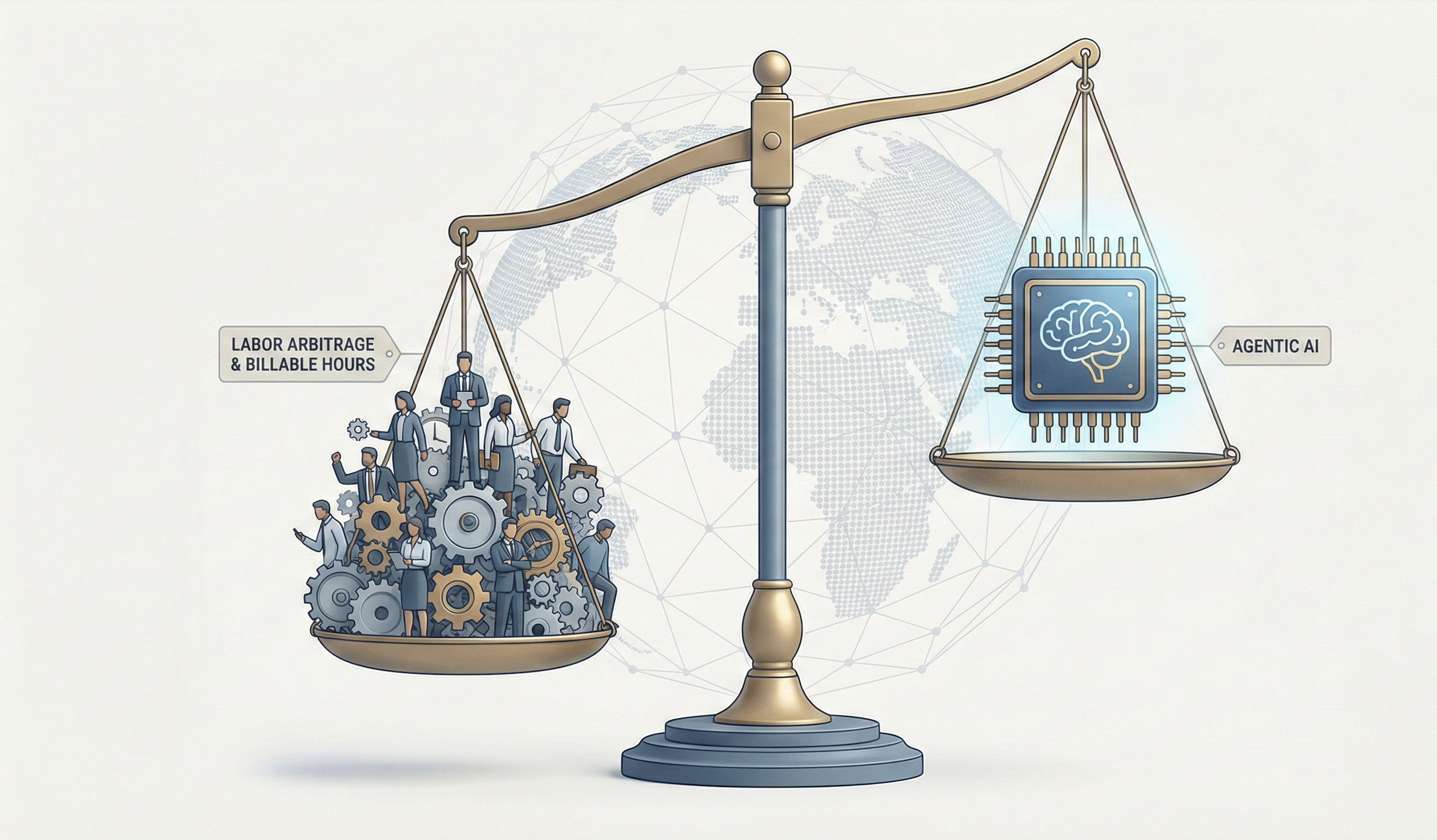
The next challenge for IT leaders isn’t just measuring AI adoption. It’s building the knowledge, judgment and financial discipline to understand what AI is actually doing for the business.
By Two93 Staff | October 2026
I think enterprises are approaching Copilot much the same way they’ve approached most technology investments.
Buy the licenses. Roll out the tools. Encourage employees to use them. Track adoption and report the results.
And there’s nothing wrong with that.
Bringing AI into a large organization is no small undertaking. IT teams have to think about security, governance, integration and change management. Employees need time to experiment and understand what these tools can do.
Tracking adoption is a sensible place to start. It tells us whether people are engaging with the technology and beginning to change how they work.
Besides, after spending millions on licenses, it’s perfectly reasonable for leadership to ask whether anyone is actually using them.
But I think we’re reaching a point where the questions need to change.
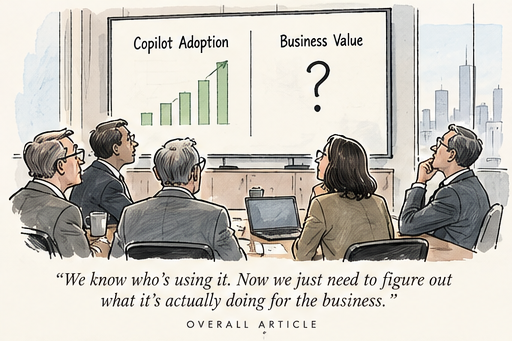
We know more about who is using AI. We need to understand more about what that usage means for the business.
Individual Productivity Is the Easy Part to Recognize
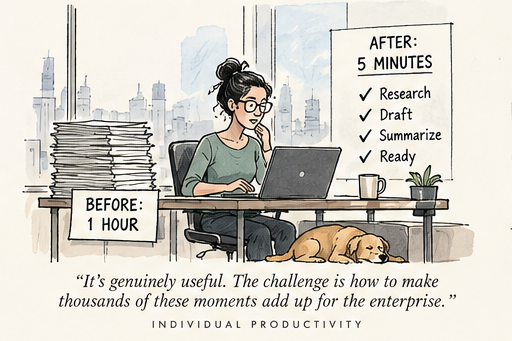
Anyone who has spent time working with Copilot or other AI tools has probably experienced moments when the technology is genuinely useful. Research that once took an hour can take minutes. Preparing documents, analyzing information or working through complex problems can become considerably easier. Of course, the results depend on the person using the technology, the task and the effort invested in learning how to use it effectively. But there’s a meaningful difference between an individual becoming more productive and an enterprise becoming more productive. How do we translate thousands of individual improvements into something an organization can measure? Does the business complete more work? Improve service? Reduce processing time? Avoid additional costs? And how do we distinguish actual improvement from time savings that simply look impressive in a presentation?
We’ve become quite good at putting productivity improvements into PowerPoint. Getting them into the financials is proving a little harder.
These are the questions worth answering.
Our Financial Models Haven’t Quite Caught Up
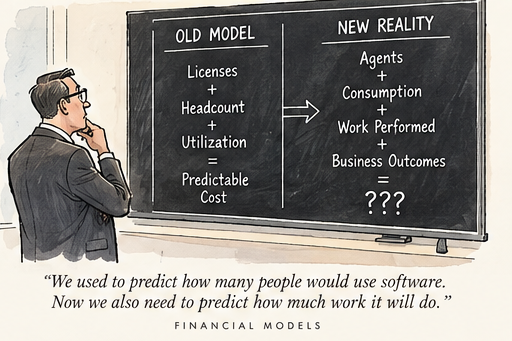
We’ve spent years developing reasonably effective ways to budget for enterprise software. We forecast headcount, negotiate license costs, track utilization and manage renewals. Copilot fits into that model initially. But AI is beginning to change the nature of what we’re purchasing. We’re not just buying access to software. We’re increasingly paying for technology that assists with work and, through agents, can perform parts of that work. That introduces another dimension to enterprise financial management.
What does an AI-assisted process cost? How does consumption change as usage grows? What happens when agents execute thousands of transactions without a corresponding increase in employees? Traditional license forecasting won’t disappear, but it won’t be sufficient on its own.
We’ve spent years trying to predict how many people will use software. Now we also need to predict how much work the software will decide to do.
That should make annual budgeting interesting. Enterprises need to start connecting technology consumption with the actual work being performed and the outcomes that work produces.
The Missing Capability May Be Organizational Judgment
I think there’s another part of this conversation that deserves more attention.
AI can provide information, generate analysis and recommend actions. But organizations still need people who understand whether those recommendations make sense.
That requires more than knowing how to use Copilot. It requires trusted knowledge of how the business operates, how decisions are made, what good outcomes look like and where the risks sit. A productivity dashboard might indicate that a process is getting faster. Someone still needs to determine whether quality is improving, whether important controls are being maintained and whether the improvement is worth the investment.
An AI agent might recommend a more efficient workflow. Someone needs the experience and judgment to decide whether that workflow belongs in the organization. And a financial model might estimate millions in productivity benefits. Someone needs to challenge the assumptions before those numbers become part of the business case.
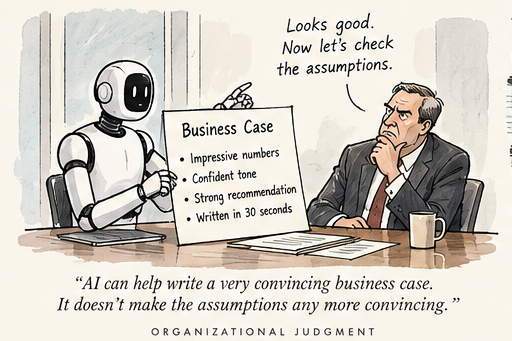
AI can now help write a very convincing business case. Unfortunately, it doesn’t make the assumptions any more convincing.
That judgment doesn’t come automatically with a software license. It has to be developed within the organization. For IT leaders, this means building capabilities that bring technology, Finance, Procurement and business expertise together. It also means investing in employees who can question AI outputs, understand their limitations and make informed decisions. The objective shouldn’t be to make organizations dependent on AI-generated answers. It should be to make them better at using AI to reach sound decisions.
Start With the Work, Not Another Dashboard
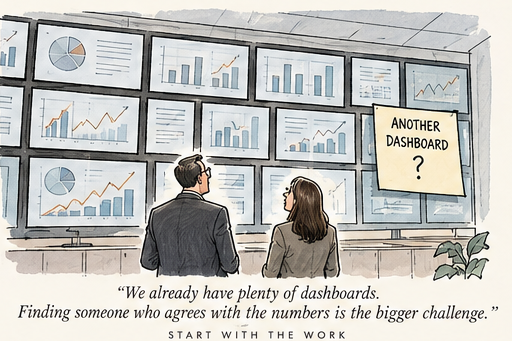
Microsoft and other technology providers are making progress in measuring adoption, usage, consumption and business impact. That’s useful, and enterprises should take advantage of it. But I wouldn’t start by building another layer of reporting. Most large organizations already have plenty of dashboards. Finding someone who agrees with the numbers on them is sometimes the bigger challenge. I’d start with a few business processes where AI is already being used.
Understand how the work happens today, what it costs and what outcomes matter. Then examine what changes when AI becomes part of that process. Measure productivity, certainly. But also measure quality, human intervention, consumption costs and business outcomes. Most importantly, involve the people who understand the work. They can often explain things that telemetry alone cannot. Over time, these practical assessments can become the foundation of a repeatable economic model—one that helps leaders forecast costs, evaluate investments and decide where AI should expand. Not every use case will produce meaningful financial value. That’s fine. Finding out early is valuable too.
Where Should IT Leaders Start? Five Practical Steps
The good news is that organizations don’t need to build an elaborate AI measurement program before getting started.
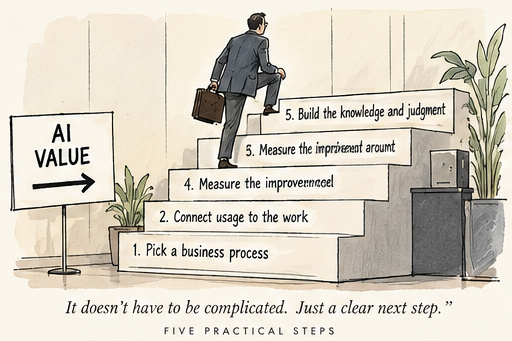
I’d begin with five practical steps.
1. Pick a business process, not a technology.
Start with something measurable: service desk tickets, invoice processing, software development or customer onboarding. Understand how the work gets done today, how long it takes, what it costs and what good performance looks like. Without that baseline, it’s difficult to know what AI actually improved.
2. Connect Copilot usage to the work being done.
Adoption dashboards are useful, but they don’t tell the whole story. Identify where employees are using Copilot within the selected process. Combine available usage data with interviews, workflow observations and business metrics. The question isn’t simply how often people use AI. It’s what they’re using it to accomplish.
3. Measure the improvement, including the human effort.
Look at cycle time, throughput, quality and rework. If Copilot helps someone complete a task in 20 minutes instead of 40, that’s worth understanding. But include the time spent reviewing, correcting or validating the output. A faster first draft isn’t necessarily a faster finished product. And generating a document in 30 seconds isn’t much of a productivity gain if it takes an hour to figure out what it says.
4. Put an economic model around the results.
Bring Finance and Procurement into the conversation. Calculate the cost of licenses, relevant consumption and the effort required to operate the process. Compare that with measurable improvements in output, capacity or avoided expense. Be clear about the difference between estimated productivity benefits and financial savings actually realized. Not every improvement needs to reduce headcount to be valuable. But the organization should understand where the benefit went.
5. Build the knowledge and judgment to repeat it.
This may be the most important step. Document what worked, what didn’t, which assumptions proved unreliable and where human judgment remains essential. Bring together people who understand the technology, the financials and the business process. Establish who validates AI outputs, who owns the economic results and who decides whether an AI use case should scale. Then apply what you’ve learned to the next process. Over time, this becomes more than a collection of AI success stories. It becomes an organizational capability for evaluating AI investments with evidence rather than enthusiasm.
The goal isn’t to prove that every AI investment was worthwhile. It’s to build the capability to know which ones are—and make better decisions about what comes next.
The Next Phase Is About Building Capability
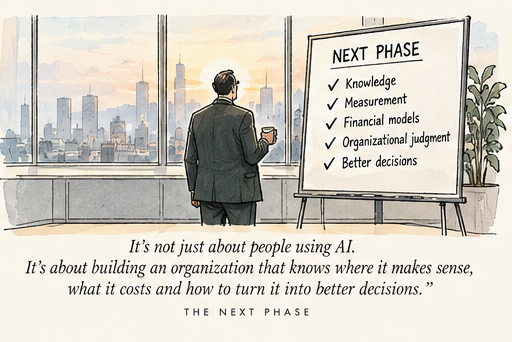
I don’t think enterprises need to abandon their AI adoption programs. They need to build on them. The first phase was about introducing AI and helping employees discover what it could do. The next phase is about developing the organizational knowledge, measurement practices, financial models and human judgment needed to use it responsibly and economically. That’s a more difficult undertaking than tracking licenses or active users. It also has the potential to be much more valuable. Because the real opportunity isn’t simply having thousands of employees who know how to use Copilot.
It’s building an organization that knows where AI makes sense, what it actually costs, when to trust it and how to turn its capabilities into better business decisions.
And that’s something no adoption dashboard can deliver on its own. Although I’m sure someone is already working on one.