By Two93 Staff
TL;DR for IT Leaders
- Adoption tells you who is using AI. The next step is proving what improves: throughput, quality, service, or cost.
- Measure the whole workflow. Include review and rework, not just faster drafts.
- Saved time needs a destination. Connect it to clearing backlogs, absorbing growth, improving service, or reducing spending.
- Vendor savings require commercial action. Faster work does not automatically lower the invoice.
- Start with one workflow. Assign an owner, establish a baseline, and assess results over four to six weeks before expanding.
Imagine your next AI steering committee meeting.
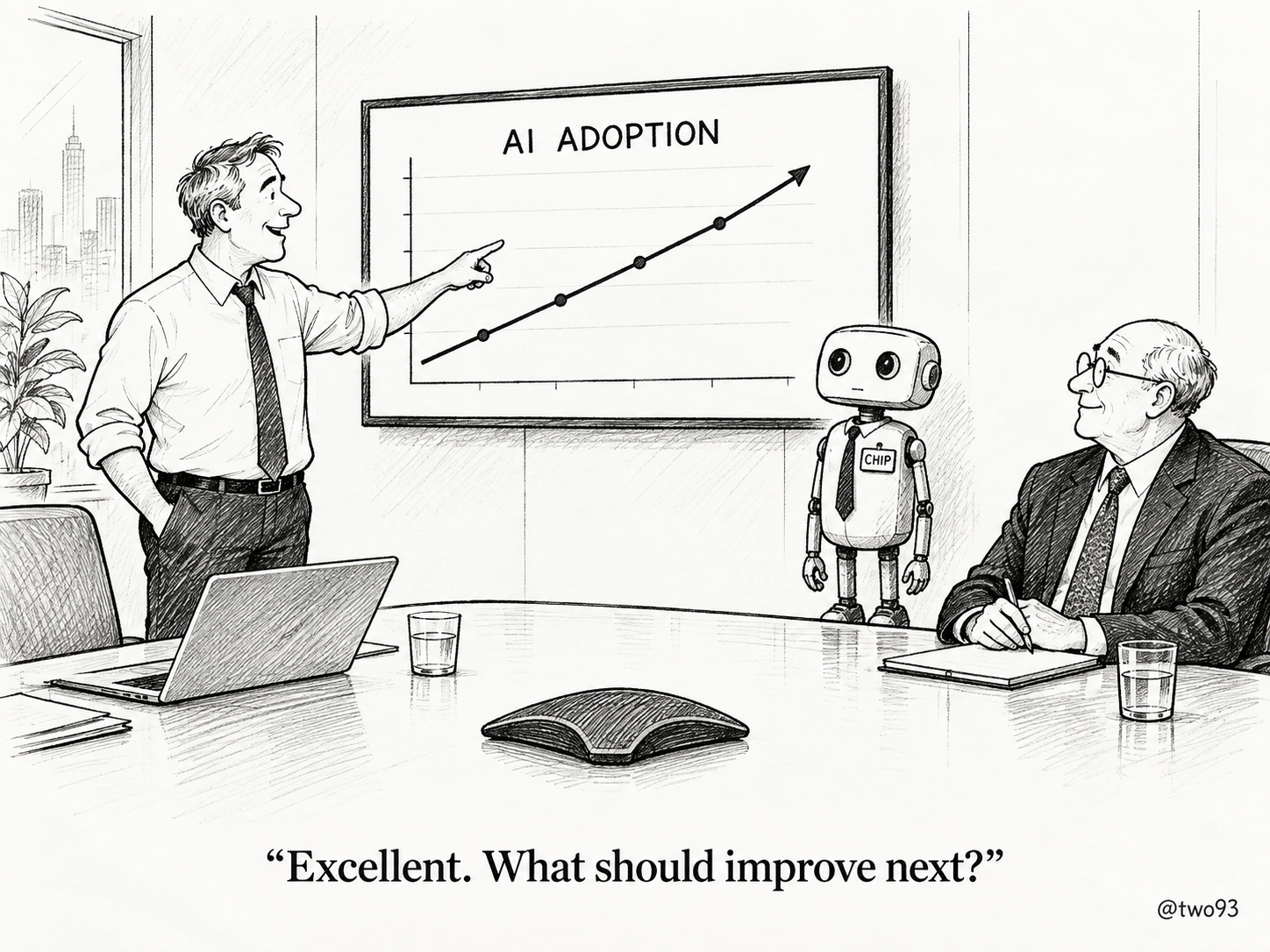
The dashboard looks encouraging. More employees are using the tools. Training attendance is up. People are finding useful ways to apply AI.
Then someone asks: “What can we do now that we couldn’t do before?”
That is where the next phase begins.
Adoption answers a necessary question: are people using what we bought? Once usage takes hold, IT leaders need to connect that activity to something the business wants to improve.
A shorter backlog. Faster customer responses. More reliable releases. Less spending on external support.
The dashboard has earned its place in the meeting. It just needs a business outcome sitting beside it.
Follow the work
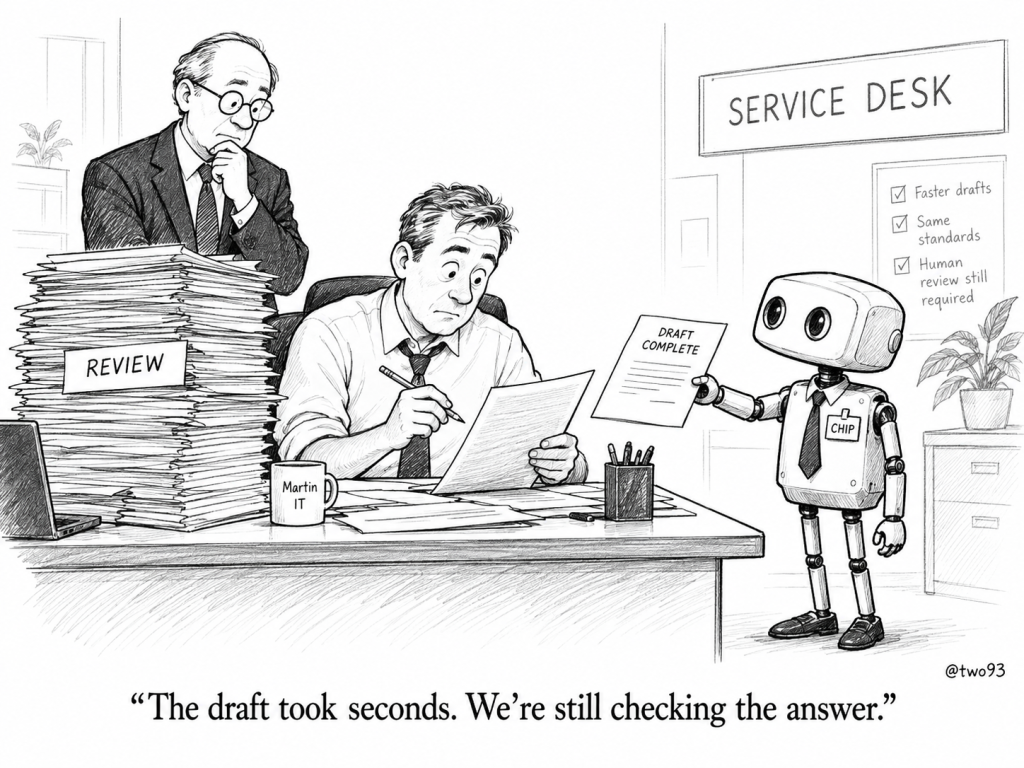
Consider an illustrative service desk workflow. AI helps analysts prepare responses more quickly. That sounds promising.
But preparing the response is only one part of resolving a ticket. Someone still needs to check the answer, confirm the fix, and close the issue. If faster responses produce more reopened tickets, some of the saved effort comes back through the side door.
The useful question becomes: Are we resolving more tickets successfully, with less total effort?
This is the shift IT leaders should make. Follow a piece of work from start to accepted result. Measure what happens to speed, quality, human effort, and cost along the way.
Existing telemetry can help. Usage data tells you who used AI and how often. Workflow systems can show completion times, backlogs, and rework. Finance can help identify the associated spending.
The missing connection is often between those records: which AI activity contributed to which outcome, and what changed compared with the previous way of working?
That requires an operating conversation alongside the data.
Decide what the improvement is for
Suppose the team demonstrates that AI frees up several hours each week. Before multiplying those hours by a salary rate, decide what you intend to do with them.
Will the team clear a backlog? Improve service coverage? Absorb growth without adding staff? Reduce overtime or external support?
Each is a different route to value, with different evidence.
Saved time can create useful capacity while payroll remains the same. Avoided hiring needs a credible staffing plan. Cash savings need an actual reduction in spending.
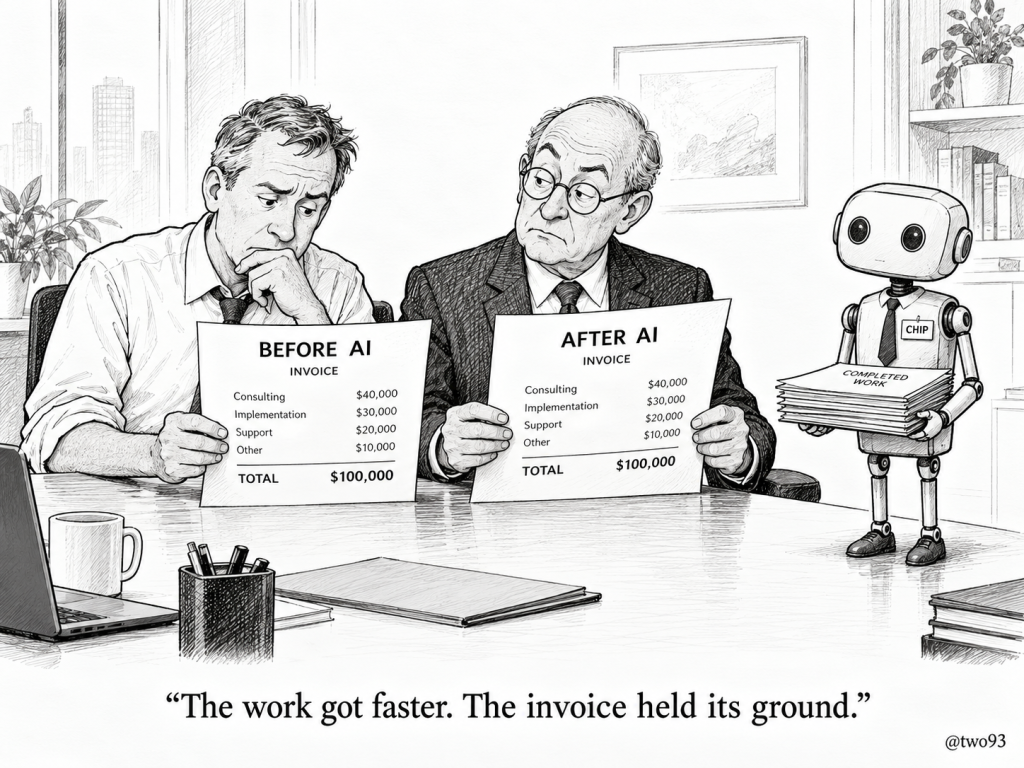
The same question applies to outsourced work. If a partner completes tasks faster under a fixed staffing arrangement, the enterprise needs to examine how that improvement affects output, staffing commitments, or commercial terms. A productivity gain does not automatically rewrite the invoice. Procurement still has to attend the meeting.
For IT leaders, this means agreeing on the intended benefit before declaring success.
Start with one recurring workflow and a business owner who cares about the result. Establish a baseline for accepted output, completion time, review effort, and quality. Track relevant AI and operating costs, acknowledging any allocation limits.
Run a four-to-six-week assessment using comparable work. Check whether task difficulty, staffing, or demand changed before attributing the improvement to AI.
Then make a concrete decision: expand the workflow, fix the bottleneck, adjust the vendor arrangement, or stop an approach that isn’t delivering enough benefit.
You do not need to solve enterprise-wide AI attribution before taking this step.
You need one defensible example of how AI changed the work—and an owner responsible for turning that improvement into something the business can use.