By Staff Writer | April 2026
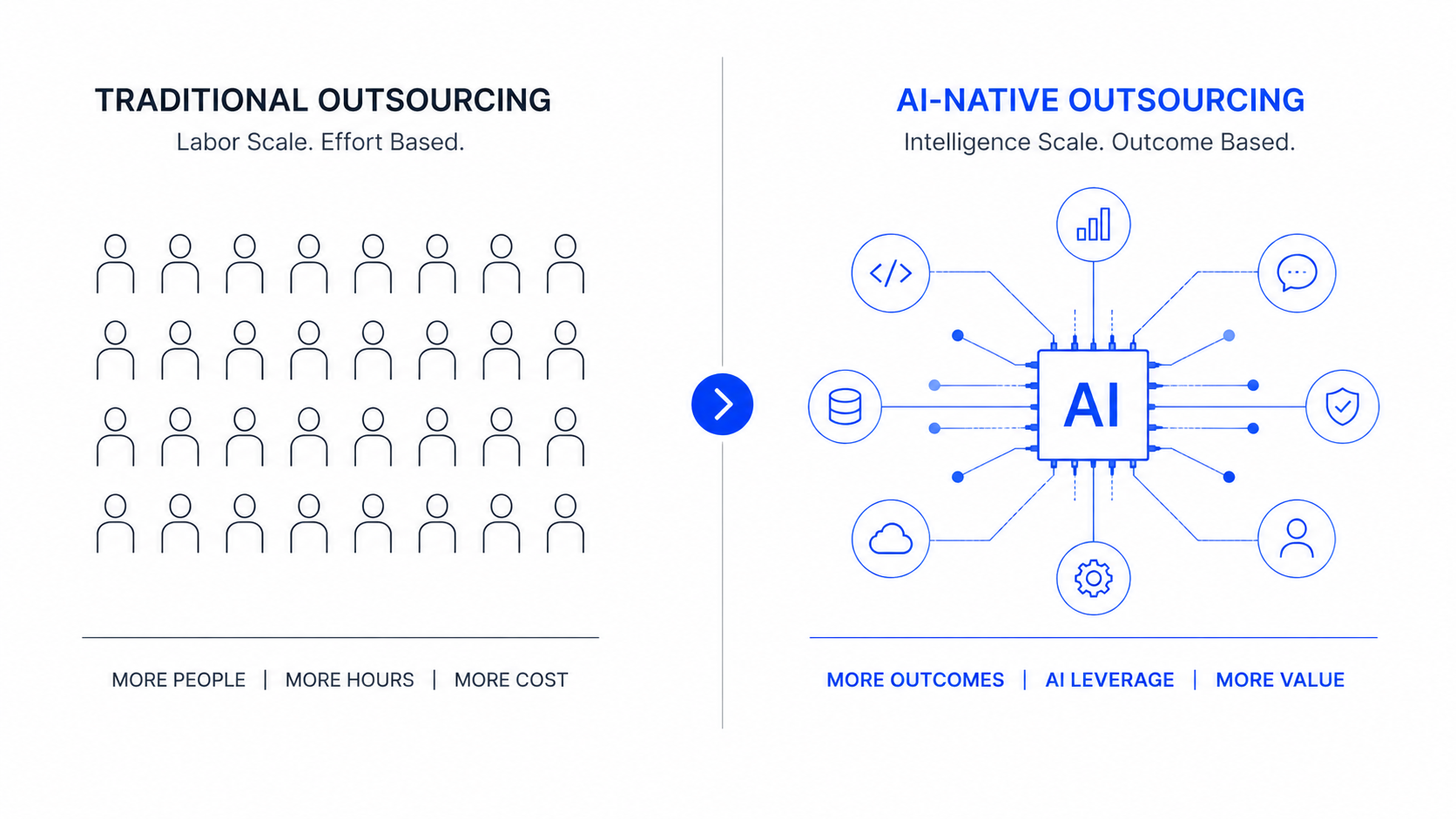
A series of recent earnings reports from India’s largest IT services providers—including Infosys, Tata Consultancy Services, and HCLTech—is pointing to a structural shift in the global outsourcing industry, as artificial intelligence begins to reshape how technology services are delivered, priced, and measured.
While revenue growth has moderated across the sector, executives and analysts say the more significant development lies beneath the surface:
a transition away from labor-driven delivery models toward AI-enabled, outcome-based services.
Slower Growth Masks Deeper Transformation
The latest quarterly and annual results show a consistent trend across major providers:
- Revenue growth forecasts have softened compared to previous years
- Large deal ramp-ups are taking longer to materialize
- Discretionary IT spending remains constrained
However, these signals are being accompanied by rapid expansion in AI-related deal pipelines and increasing integration of AI capabilities into existing contracts.
Industry observers note that this divergence reflects a transition period, where traditional services are slowing even as AI-led offerings scale.
Headcount Model Under Pressure
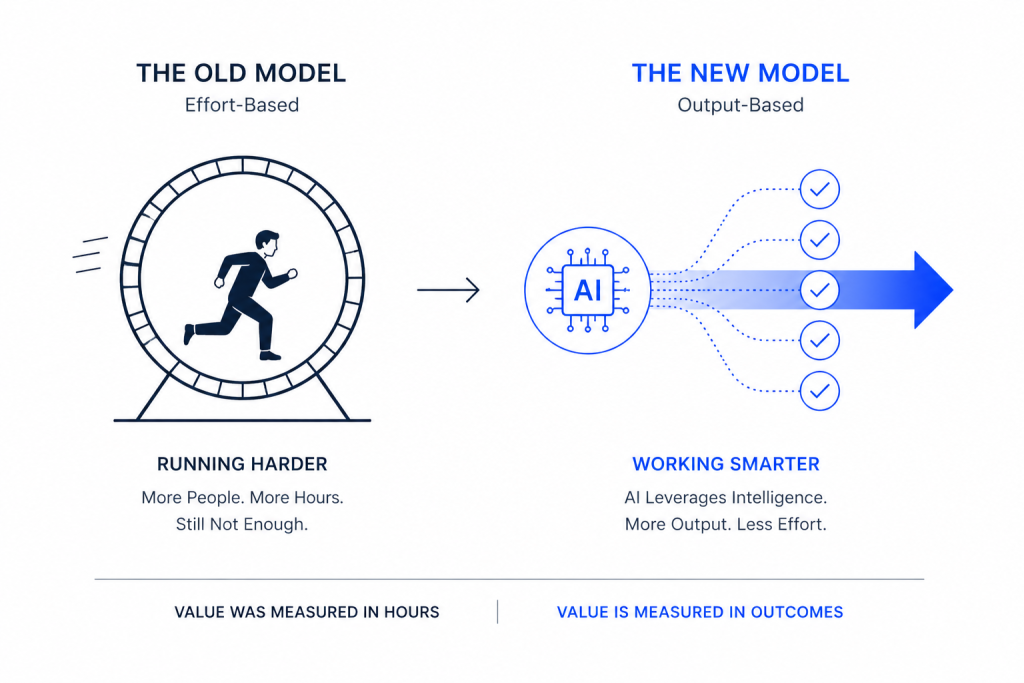
One of the clearest indicators of change is in workforce trends. Historically, outsourcing firms expanded revenue by increasing headcount, particularly in offshore delivery centers. Recent disclosures suggest that this relationship is weakening.
Several firms reported flat or declining net headcount, even as they highlighted gains in productivity driven by automation and AI tools.
“The linkage between revenue and employee count is no longer linear,” said one analyst following the sector. “Firms are delivering more output with fewer incremental hires.”
This shift is being driven by the growing use of generative AI and automation across software development, testing, infrastructure management, and business process services.
AI Moves Into Core Delivery
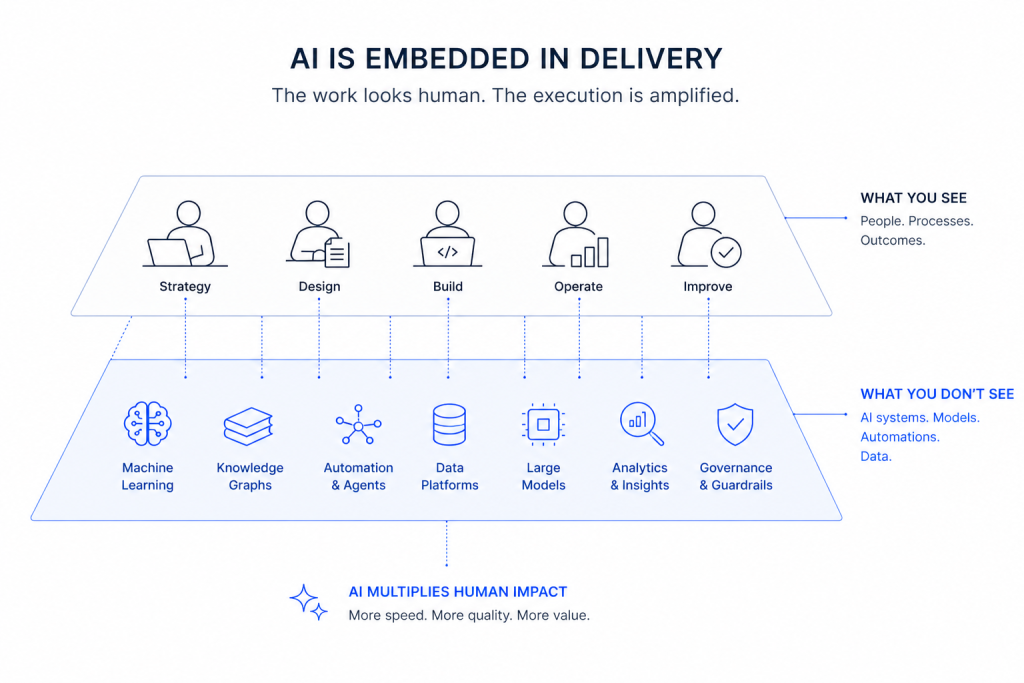
Executives across the major firms emphasized that AI is no longer confined to pilot projects or innovation labs. Instead, it is being embedded into core service delivery.
- AI-assisted coding and testing are accelerating development cycles
- Automated support systems are reducing manual intervention in operations
- Knowledge platforms powered by large language models are improving response times and accuracy
As a result, clients are increasingly incorporating AI into transformation programs, rather than treating it as a standalone initiative.
Deal Structures Begin to Evolve
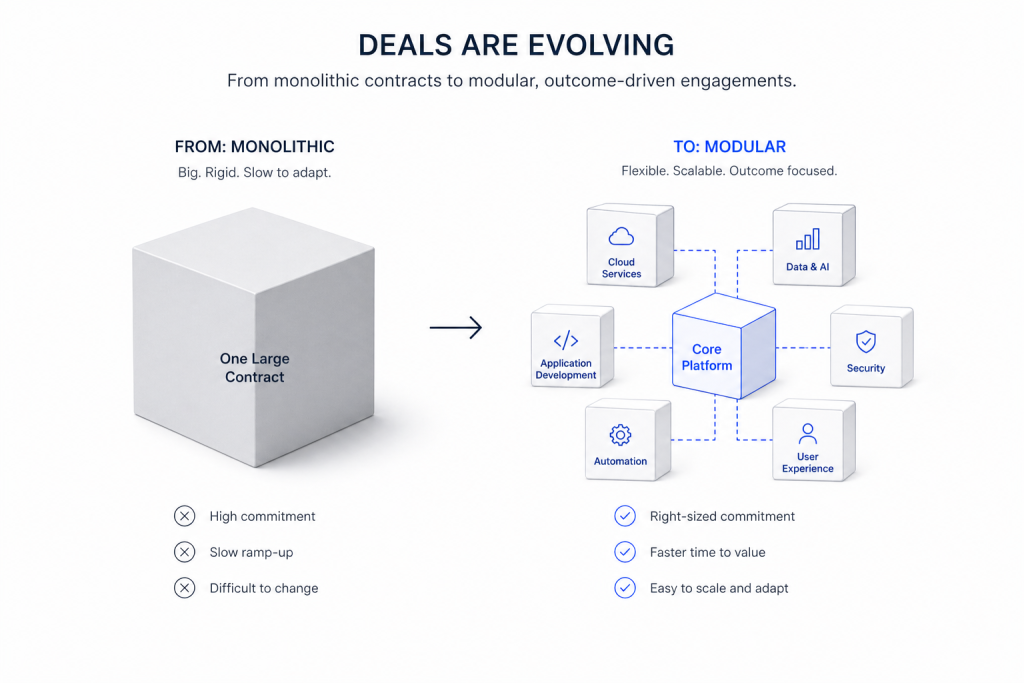
The shift toward AI is also influencing how outsourcing contracts are structured.
Recent deals are showing:
- Smaller initial commitments with phased scaling
- Greater emphasis on outcomes and performance metrics
- Integration of AI capabilities within broader transformation agreements
Providers are also investing in proprietary platforms and partnerships with cloud and AI vendors to deliver more integrated solutions.
This evolution reflects a broader move away from traditional, multi-year, labor-based contracts toward more flexible and modular arrangements.
Pricing Models Face Pressure
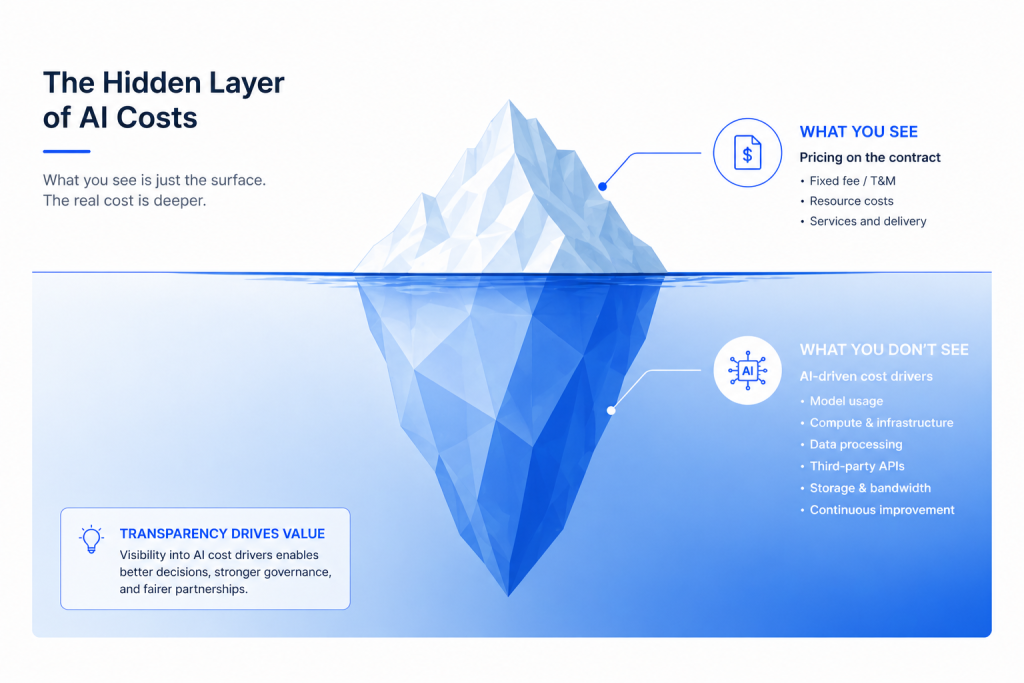
The rise of AI is introducing new dynamics into pricing.
On one hand, automation is lowering the cost of delivering services, allowing providers to protect margins. On the other, clients are increasingly expecting these efficiencies to translate into lower prices or improved service levels.
This tension is expected to accelerate the shift toward alternative pricing models, including:
- Outcome-based pricing
- Usage-based or consumption-driven models
- Hybrid structures combining fixed fees with performance incentives
Analysts say that pricing transparency—particularly around AI-related cost drivers such as compute usage and model access—will become a key area of negotiation.
CIOs Rethink Outsourcing Strategies
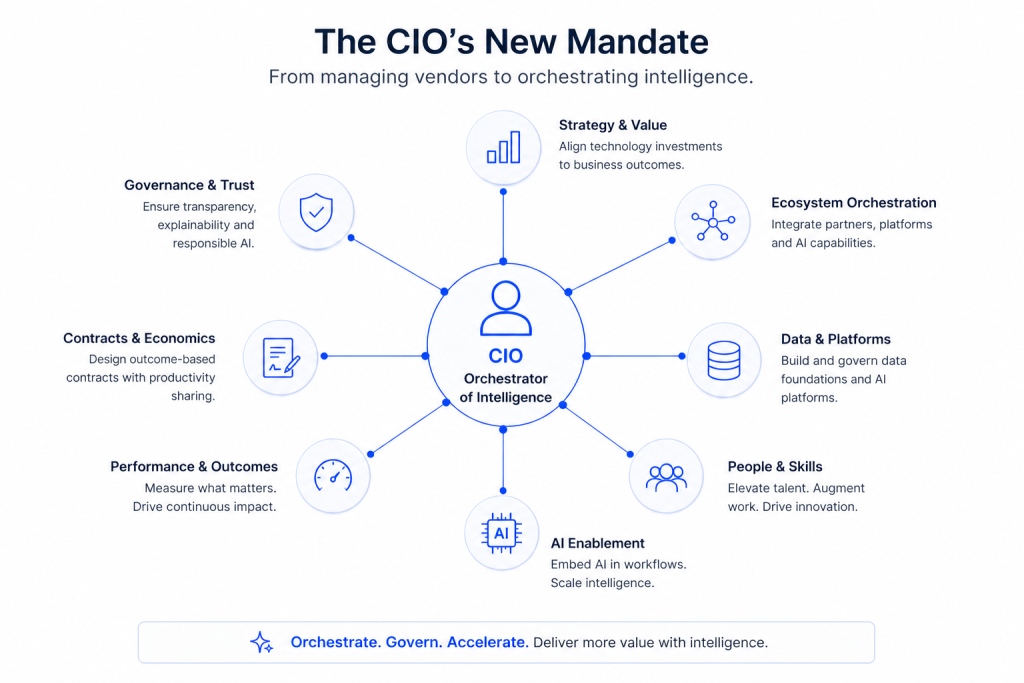
For enterprise technology leaders, the changes underway are prompting a reassessment of outsourcing strategies.
Key considerations include:
- Evaluating providers based on their ability to scale AI in production environments
- Updating contracts to reflect outcome-based delivery and AI economics
- Introducing new governance mechanisms to ensure visibility into AI-driven processes
“There’s a growing realization that outsourcing is no longer just about cost efficiency,” said a CIO at a large financial services firm. “It’s about accessing and managing intelligence at scale.”
Industry at an Inflection Point
The combined signals from Infosys, TCS, and HCLTech suggest that the outsourcing industry is entering a new phase, shaped by the adoption of AI technologies.
While the transition is still in its early stages, its implications are significant:
- Growth may remain uneven as legacy and AI-driven services coexist
- Workforce models will continue to evolve toward higher-skilled roles
- Competitive differentiation will increasingly depend on AI capabilities and intellectual property
For now, the industry appears to be navigating a period of adjustment. But as AI adoption accelerates, the changes reflected in recent earnings reports may mark the beginning of a more fundamental transformation in how global technology services are delivered.
Bottom line: Outsourcing is shifting from a model built on labor scale to one defined by AI-driven capability—reshaping both the economics and the expectations of the industry.