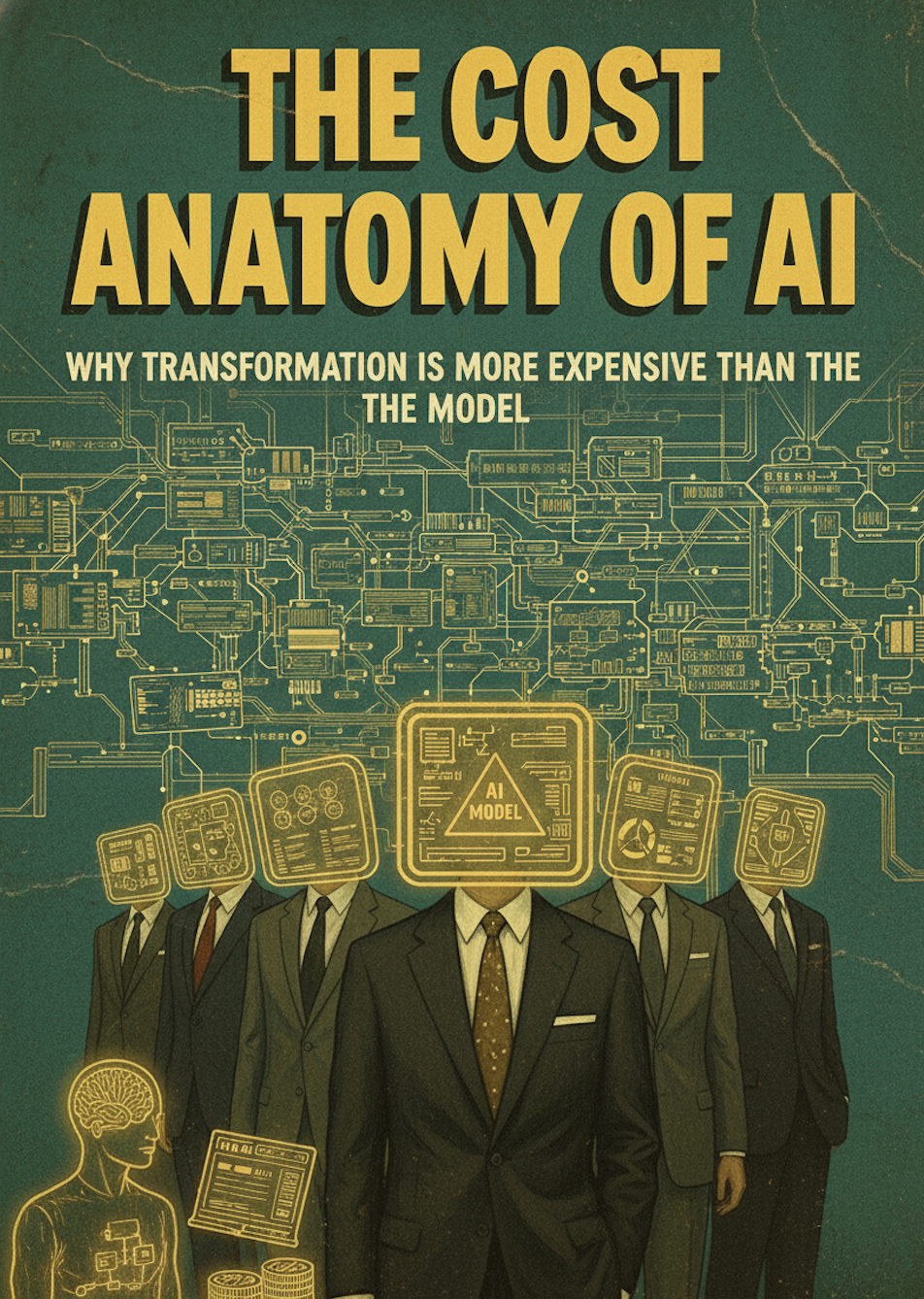
Why CIOs and CFOs Are Entering the Most Unpredictable Technology Budget Cycle in Decades
By Two93 Staff
Last year, a technology executive approved a small AI pilot. The budget was modest. The business case was straightforward. A few teams would experiment with AI-assisted development and automation to improve productivity. Six months later, the pilot was considered a success. Adoption had spread across the organization. Usage was climbing rapidly. Employees were finding new ways to use AI every week. There was only one problem.
Nobody could accurately predict next month’s bill.
For decades, enterprise software budgeting followed a familiar formula. Companies purchased licenses, negotiated discounts, and forecasted spending based largely on headcount. If an organization had 5,000 users, leaders generally knew what next year’s software budget would look like.
AI is changing that equation.
Across the technology industry, software vendors are quietly moving away from the traditional seat-license model and toward a world built on tokens, credits, AI actions, reasoning cycles, and agent executions.
The shift sounds technical. Its consequences are financial. And they are beginning to reshape how technology leaders think about budgets, governance, and vendor relationships.
The New Risk Nobody Budgeted For in AI
For years, CIOs were encouraged to drive AI adoption. More users meant more value. More usage meant greater return on investment. Software spending and software value generally moved together.AI introduces a different dynamic.
The same employee can generate dramatically different costs depending on how they use the technology. One developer may ask an AI assistant a handful of questions each day. Another may run autonomous coding agents, generate documentation, analyze repositories, execute tests, and orchestrate complex workflows around the clock.
Both occupy one seat. One may consume fifty times more resources.
For the first time in decades, technology spending is becoming increasingly disconnected from headcount.
That reality is beginning to make CFOs uncomfortable. The next AI budget review may be the first time many finance leaders discover that counting users is no longer enough to forecast technology costs.
The End of the Subsidy Era
The shift should not come as a surprise. For much of the past three years, technology vendors aggressively subsidized AI adoption. The objective was simple: encourage experimentation, build market share, and establish AI as a core part of enterprise workflows. The economics were always temporary. Every AI interaction consumes infrastructure. Every prompt requires compute. Every agent action generates cost. The more successful AI becomes, the more expensive it becomes to deliver. At some point, vendors had to align pricing with reality.
That moment has arrived. Across the market, providers are introducing AI credits, consumption-based pricing, agent fees, usage pools, and premium charges for advanced reasoning capabilities. What was once the vendor’s problem is increasingly becoming the customer’s problem.
The uncertainty of infrastructure scaling is moving from vendor balance sheets to enterprise budgets.
Why This Feels Familiar
Veteran technology leaders have seen this movie before. Mainframes gave way to client-server computing. Client-server evolved into cloud. Cloud evolved into software-as-a-service. Each transition changed how technology was purchased, governed, and funded. AI is simply the next chapter.The difference is speed. Previous technology shifts unfolded over years. AI adoption is unfolding over quarters. Organizations are being asked to rethink budgeting, governance, and operating models at a pace few technology leaders have experienced before.
The Rise of TokenOps
The cloud era gave enterprises FinOps—the discipline of managing cloud consumption through visibility, governance, and accountability. AI is creating a similar requirement. Call it TokenOps. The premise is straightforward: organizations must understand not only what they are spending on AI, but what value they are receiving in return.
That means answering questions that barely existed a few years ago. How much does it cost to generate a software feature using AI?How much does an AI-powered customer interaction cost? Which business units are consuming the most AI resources? Which models deliver the strongest economic outcomes?
The organizations asking these questions today will be in a far better position than those waiting for their first unexpected overage bill.
The New Procurement Challenge
For procurement and vendor management teams, the implications are significant. For years, negotiations focused on seats, discounts, and contract terms. Now they increasingly revolve around consumption, transparency, governance, and financial controls. Technology leaders are discovering that the most important question is no longer:
“How many users do we have?”
The more important question may be:
“What are we consuming, and what value are we getting in return?”
That is a fundamentally different conversation.
TL/DR
The organizations that succeed in the next phase of AI adoption will not necessarily be the ones spending the most. They will be the ones that understand the economics behind their choices. For twenty years, enterprise software was largely about managing licenses. The next decade will be about governing consumption.The seat-license era helped build the software economy. The token economy is about to reshape it.