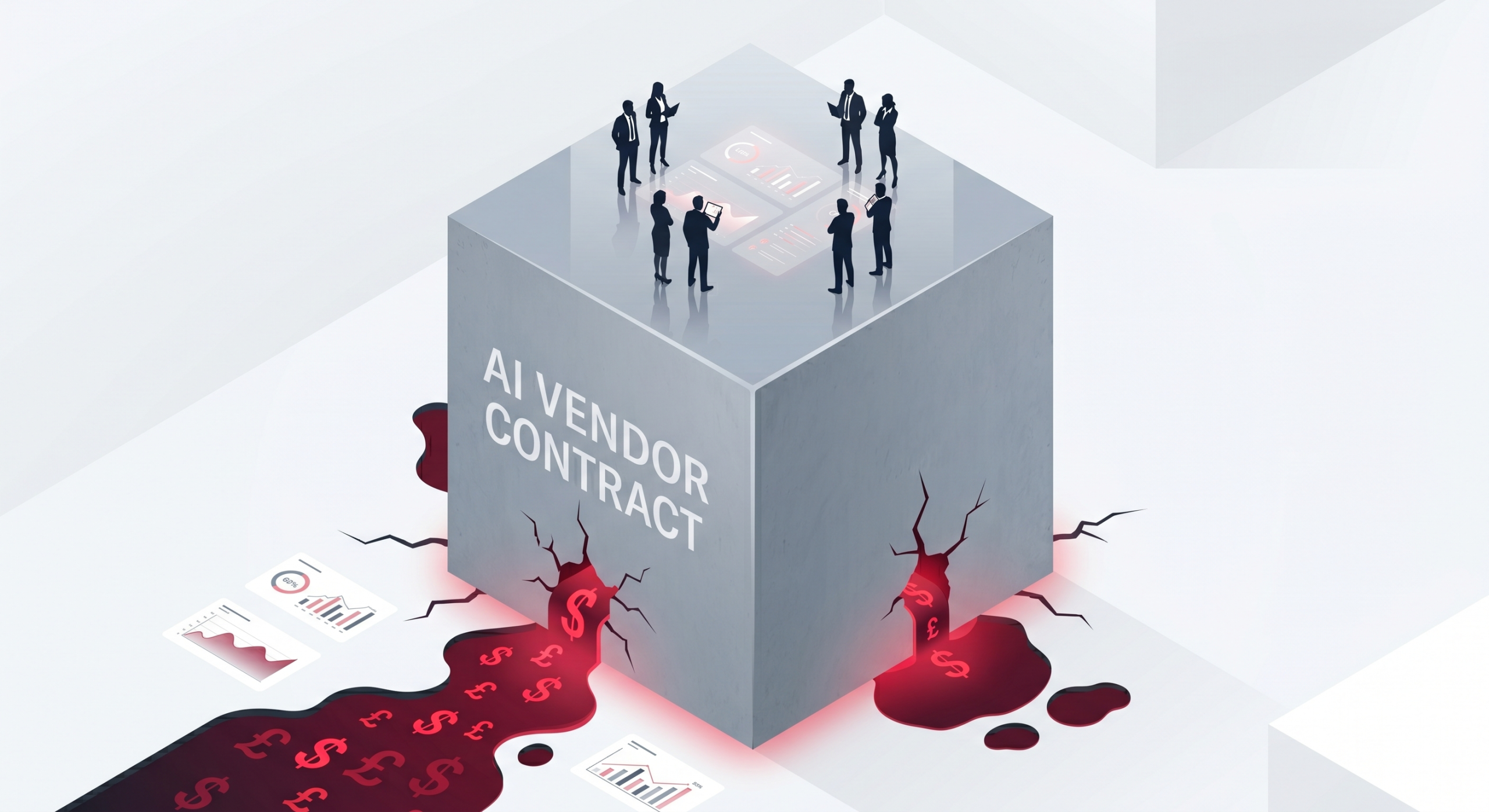
Insurance carriers are masters of pricing risk. They can model weather exposure, litigation severity, loss development, fraud patterns, and customer retention with surgical precision. But ask a simpler question: What does one AI-assisted claim actually cost?
In many organizations, the response is a long pause followed by a dashboard nobody fully trusts.
This is the “AI Transparency Gap.” As AI scales across claims, underwriting, and customer service faster than commercial models can mature, a new financial reality is setting in. Vendors are selling “AI-enabled” workflows; SaaS providers are bundling copilots; and system integrators are embedding model usage into managed services.
Somewhere inside that bundle, the meter is running. And it isn’t metaphorical.
The Hidden Anatomy of an AI Invoice
The uncomfortable truth for the C-Suite is that your AI vendor may not be overcharging you in the traditional sense. The contract may be doing exactly what it says. The problem is that the contract doesn’t say enough.
Recent 2026 industry benchmarks suggest that for every $1 spent on raw AI model licensing, enterprises are spending an additional $5 to $10 on “production-readiness” costs that rarely appear in the initial quote. These hidden drivers often create a 30% budget slippage within the first twelve months of deployment:
- The Token Tax & Context Creep: Consumption-based pricing is volatile. As claims documents grow in complexity, the “context window” (the amount of data the AI processes at once) expands, quietly doubling the cost per interaction without a single change in volume.
- The “Maintenance Tax” of Drift: Unlike legacy software, AI performance degrades. Monitoring for “model drift” and the subsequent retraining cycles are now permanent line items, often consuming 15-25% of the initial build cost annually.
- The Integration Underestimate: IT leaders report that integrating AI into legacy core systems is consistently underestimated by 30-50%. Custom adapters, API maintenance, and data cleansing for “AI-readiness” are the silent killers of ROI.
- Governance Retrofitting: Implementing the audit trails and “explainability layers” required by the latest state AI acts (like Colorado’s 2026 regulations) often triggers mid-project budget increases of 20% just to meet compliance.
From Activity to Outcomes: Rethinking the Contract
Traditional enterprise software was tied to seats; AI is tied to utility. For two decades, IT leaders negotiated predictable annual licenses. Today, we are moving toward a utility-like model where costs fluctuate with model intensity rather than employee count.
The 30% “surprise” usually stems from a failure to align the unit of cost with the unit of value. If you are paying by the token but your business value is measured by “claims closed per day,” you have a fundamental decoupling of your P&L.
“AI that speeds up claims but hides the underlying cost isn’t transformation; it’s just a faster invoice.”
The Strategic Directive
The next phase of AI in insurance will not be won by the carrier with the most pilots. It will be won by the carrier that masters the economics of the “AI Industrial Complex.”
To protect your margins, the mandate for 2026 is clear: Move beyond the pilot and audit the meter. Demand transparency in token utilization, negotiate “caps” on context window scaling, and ensure that your MLOps costs are baked into the vendor’s SLA—not added as a professional services “gotcha.”
The bottom line: In the race to automate, don’t let your efficiency gains be consumed by a contract you didn’t see coming.
The next phase of AI in insurance will not be won by the carrier with the most pilots. It will be won by the carrier that understands the economics. Because AI that speeds up claims but hides cost is not transformation. It is just a faster invoice.